Na Biblioteca de Scarpa
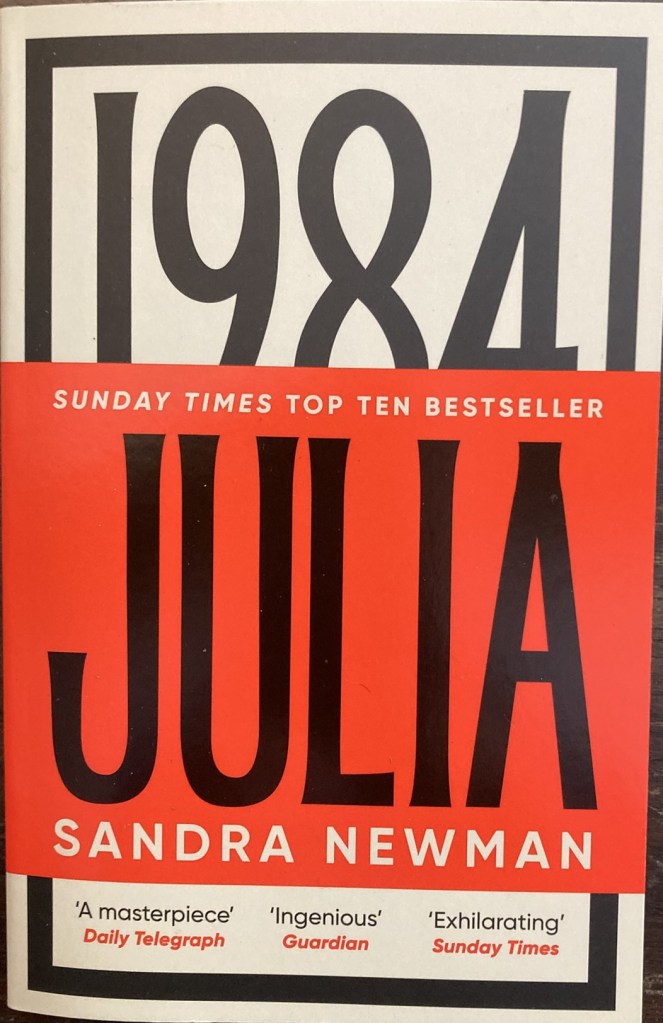
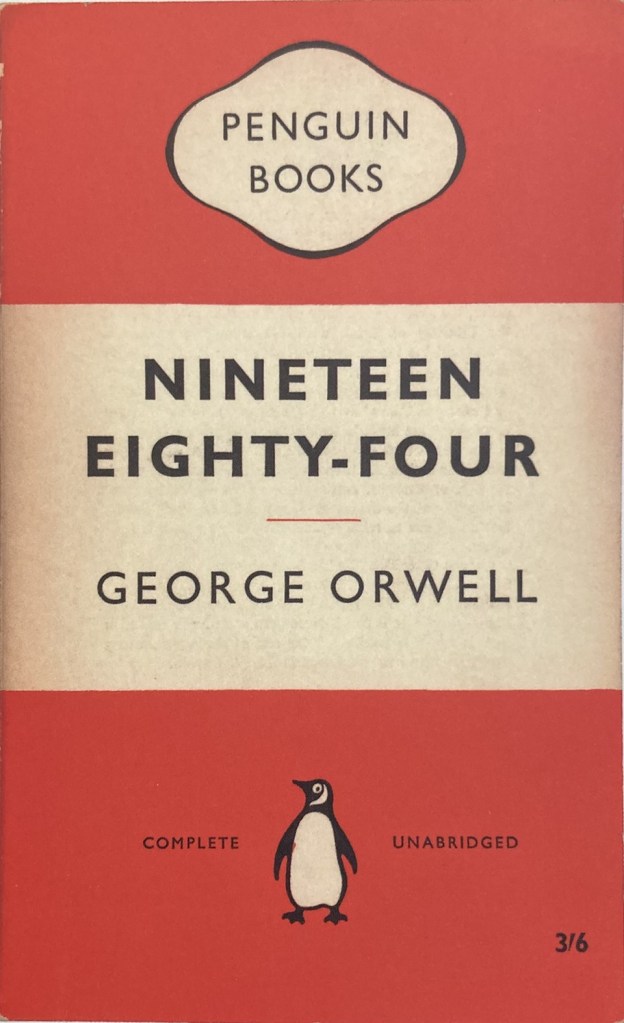
Following Gustavo Scarpa’s appearance discussing his five favourite authors in “On and Off the Pitch”1, we paid a visit to Biblioteca Scarpa in Brazil to find out more about the greats of World literature. We spoke to Professor Socrates Scarpa at the library to find out more about one of the most famous books by one of Scarpinha’s favourites: Nineteen Eighty-Four by George Orwell, covering the novel’s subject matter, main characters, and plot.

Spoiler alert: the article below gives away the ending of Nineteen Eighty-Four, so if you have not yet read the book, perhaps save this article for a later date. However, if you are studying Nineteen Eighty-Four for your GCSEs, go ahead and read on. You’ll get some precious insights and quotes for the paper.
Overview
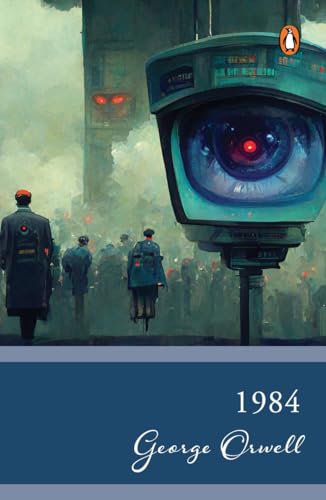
Nineteen Eighty-Four is the story of one man’s struggle against hidden all-powerful rulers. Without giving too much away, the novel Nineteen Eighty-Four is set in the year 1984. This is a year so distant that it will feel like a foreign country to many readers. For example, there are screens everywhere which brainwash the population by showing a continuous stream of banal content. These same screens are also used to monitor people by listening in to what you are doing and collecting data about you which can be used against you.
Part I
Part I of Nineteen Eighty-Four introduces us to the hero of the story and his life and times. Our hero is Winston Clough. He lives, appropriately enough, at No 1, Victory Mansions. His day job is to rewrite history at which he is very successful, having gained promotion from Division Two, finished top of Division One, and then having gone on to win the European Cup. Twice.
One of the main themes of Orwell’s Nineteen Eighty-Four is the use of language to change meaning. Note how he refers to the Championship as “Division Two” suggesting that it is the second tier of English football, whereas everyone knows that it is a competition to determine the English Champions. And, as any Derby County supporter will tell you, the top tier of English football is called “League One”.
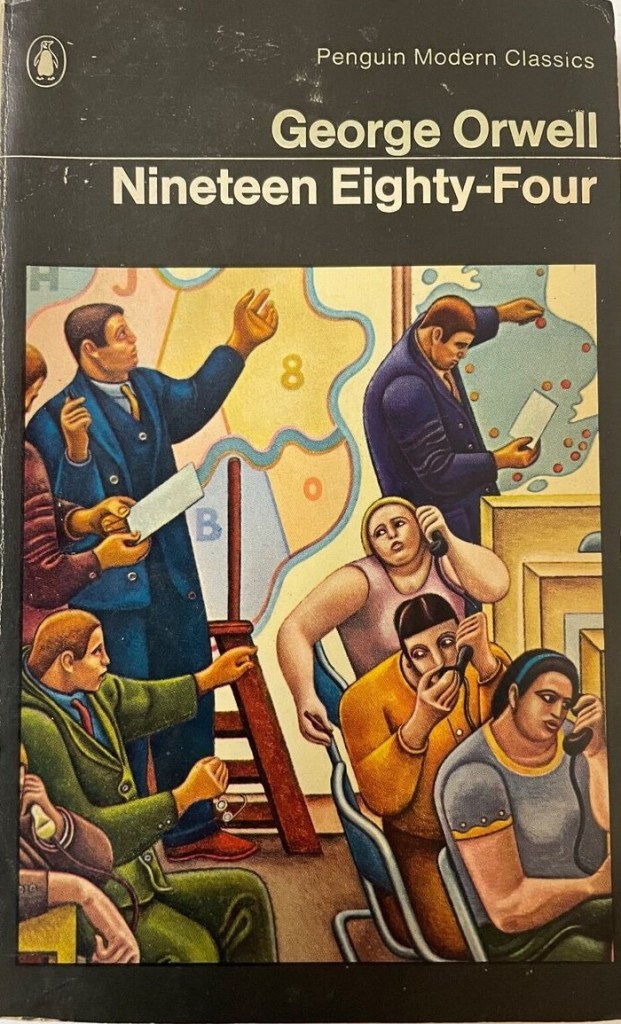
Two more features of Nineteen Eighty-Four are: “The Party”, the organisation that controls life for people throughout the country; and “Big Brother”, the cult-like figure used to personify The Party. Orwell based The Party on the mysterious worldwide cabal that runs football worldwide, a cabal which includes groups such as the FA, UEFA, and, at the top of the pyramid of evil, FIFA itself. Big Brother himself is an amalgam of characters such as Ted Croker and Sepp Blatter who have at one stage or another fronted parts of the cabal.
Also in Part I, we are introduced to the prevailing orthodoxy of football, invented by Charles Hughes and known as “The Winning Formula”. This theory, also known as the long ball game, is epitomised by teams such as Watford and Wimbledon. Party slogans such as “Long Forward Passes” and “Position of Maximum Opportunity” are visible everywhere in 1984. Winston Clough is opposed to these beliefs and records his defiance of them in an illegal diary, secretly writing comments such as “If God had wanted us to play football in the sky, He’d have put grass up there” and “You get the ball, you pass it to a Red shirt.” Part I describes how Clough meets Giulia Birtles and the rest of the Anti-Ram League – a dedicated group of young footballers who wear scarlet shirts and are committed to playing the game the right way.
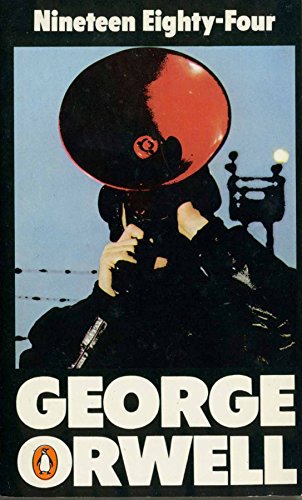
Nineteen Eighty-Four also introduces us to another concept that has become famous in the years since it was published: the “Two Minute Hate”. Every day at 11:00 am, the populace gathers to scream abuse for two minutes at a screen showing the current England football manager. A related feature is the “Two Hour Love” where vacuous television presenters fawn unashamedly over Manchester United for two hours every week.
You may also be aware of the following Nineteen Eighty-Four quotes:
- “2-0 plus 2-0 equals 4-0” – used to illustrate the basic philosophy of two legged knock-out football. Score more goals than the opposition over two legs and you win.
- “We are the Reds” “We are the Reds” – the chant of the Anti-Ram League.
- “Who controls the pass controls the future. Who controls the present controls the pass” – a simple statement of the footballing philosophy of the Anti-Ram League: get the ball down and play it to feet.
Part II
Part II follows Clough, Giulia, and the Reds through a series of adventures.

In 1982/3, Forest finished 5th in the League behind champions Liverpool, equal on points with Spurs, one point behind Man Utd in third, and two points behind Watford, yes, really, Watford, who were runners up in 82/3. Forest, Watford, Spurs, and Villa qualified for the UEFA Cup (now known as the UEFA Europa League).
In the first round, in September 1983, Forest beat Vorwaerts of Frankfurt home and away with Ian Bowyer, Ian Wallace, and Harry Hodge scoring in a 3-0 aggregate win. In the second round, Forest again won home and away, this time 3-1 on aggregate against PSV Eindhoven. Peter Davenport (2) and Colin Walsh got the goals. The third round late in 1983 saw Forest clash with Celtic. After a goalless first leg at the City Ground, Gary Birtles and Peter Davenport turned the Celtic defence inside out at Celtic Park. Davo set up Hodgy for 1-0 after an incredible run from Steve Wigley. 20 minutes later, Davo, put through by Birtles, went on his own run and set up Walshy for 2-0.
Forest were drawn against Sturm Graz of Austria in the quarter final to take place in March 1984. Forest won the first leg in Nottingham 1-0 thanks to a Paul Hart goal. In that game, Viv Anderson dislocated an elbow which meant a debut appearance for Des Walker, at right back, in Forest’s next match against Everton. However, Viv was back in the side for the second leg of the quarter final. Just before half time, Spider gets one of his long legs to the ball just ahead of the Sturm Graz forward; however, the ref gives a penalty and the scores in the tie are level. Forest can’t break the deadlock, so the game goes into extra time. Halfway through the second half of extra time, Forest get their own penalty as Harry Hodge goes down under a challenge in the area, and the ever reliable Colin Walsh steps up and scores. To be honest, both pens look a little dodgy.
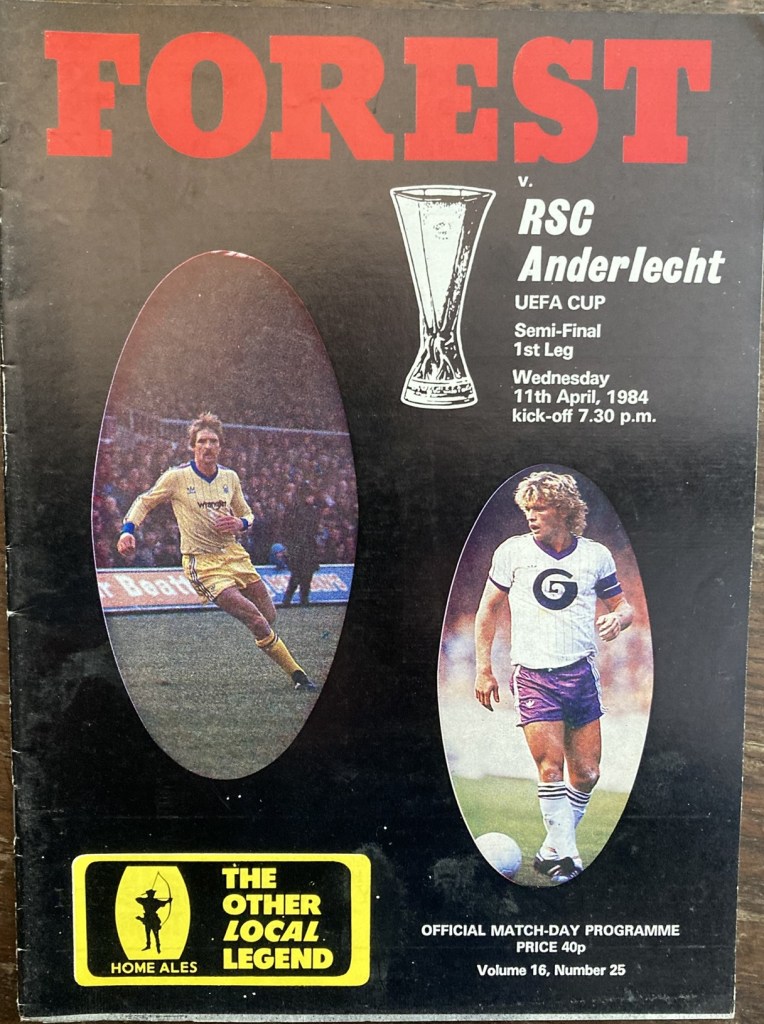
Forest are through to the semi where they are drawn against Anderlecht with the first leg at the City Ground. The Reds leave it late in the first leg; however, two excellent headed goals from Harry Hodge gave Forest a 2-0 lead going into the second leg.
All of which sets us up nicely for the last part of Orwell’s novel. I love a happy ending.
Part III
The final part of Nineteen Eighty-Four covers the events following on from the first leg. Forest, unbeaten in the competition so far, draw the second leg in Brussels and then beat Spurs home and away in the final. Clough’s young team go on to lift the FA Cup in successive seasons, doing the League and Cup double in 1985/6 before lifting the European Cup for a third time in 1987.
At least that’s how I remember it, although I’m not always 100% confident about my memory these days. I’m sure I’ve got the old programmes somewhere, but, unfortunately, I can’t find them. And, rather strangely, I can’t find any reference to those successes on the internet.
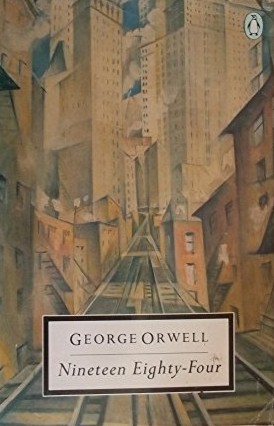
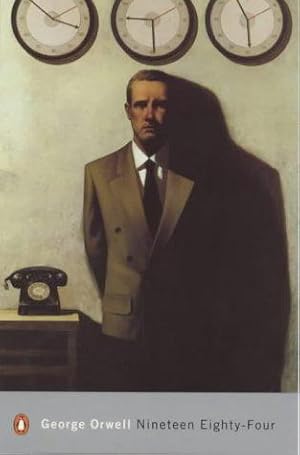
Orwell didn’t want a happy ending. His book is a much darker affair. He was writing about a dystopian society having a very limited familiarity with the concept of objective truth.
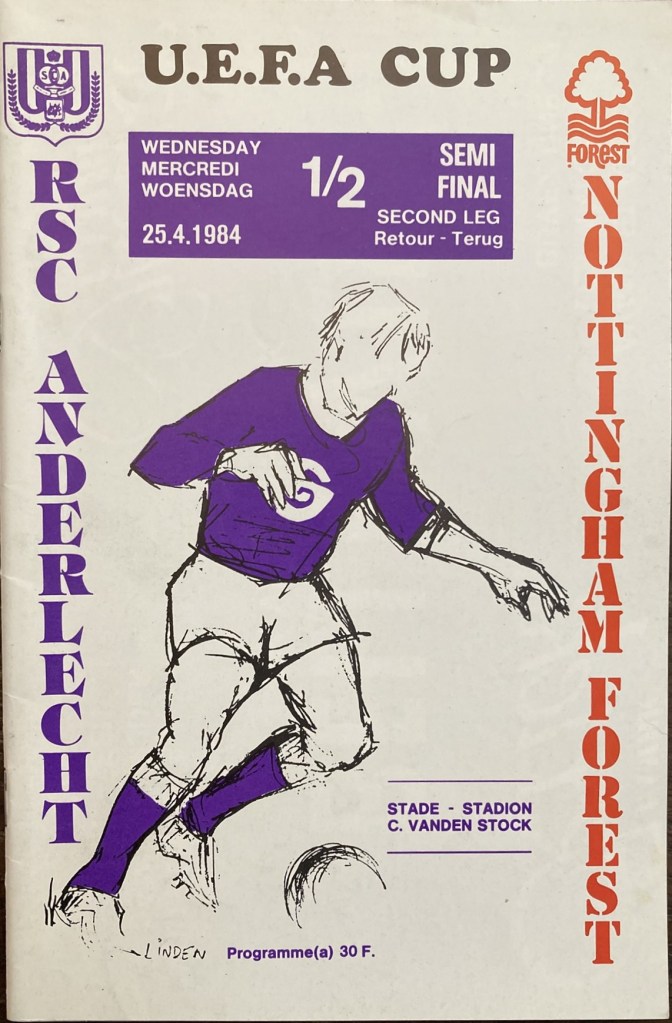
Part III of the novel Nineteen Eighty-Four, Orwell’s version of history, starts with the second leg against Anderlecht. Clough and his players are inside the tunnel of Stadium 101 in Brussels during the moments before the start of the game. Clough begins to have doubts about the referee, given the name O’Brien by Orwell. Could he be sympathetic to the Reds’ approach and encourage fair play? Then Reds centre half Paul Hart sees the ref coming out of the Anderlecht dressing room and recognises him. “That ref – he’s reet dodgy. We had him once when I waur wi Leeds. Sent off two of our players for nowt,” he says to Kenny Swain.
After 18 minutes of the game, Enzo Scifo beats Van Breukelen at his near post to make the aggregate Forest 2 Anderlecht 1. Anderlecht go on to have a number of free kicks on the edge of the box, but can’t beat Van Breukelen again.
After 60 minutes, Kenneth Brylle, the Anderlecht #11, goes past Kenny Swain into the box and then dives after he’d left Swainy three yards behind. The ref, standing next to Swainy, points to the spot. Brylle scores the penalty himself meaning the tie is level at 2-2. Van Breukelen continues to keep Anderlecht at bay until the 88th minute when Erwin Vandenbergh gets on the end of a through ball and puts Anderlecht ahead 3-0 on the day and 3-2 on aggregate. There is still a chance for the Reds. An away goal for Forest would win it. Following the restart, they go down the other end and get a corner from which Paul Hart heads what should prove to be the winner. The referee disallows it. The game ends with Anderlecht going through2,3.
Reaction and Aftermath
- Garry Birtles: “”That penalty was the most embarrassing decision I have ever seen in football.”
- Hans van Breukelen: “The referee was cheating”.
- Anthony Burgess (author of A Clockwork Orange): “An apocalyptical codex of our worst fears”.
- Paul Hart: “”The whole thing stinks, it really does.”
- Brian Clough: “ ‘You know we were cheated, don’t you?’”
Anderlecht were never punished for the events of 1984. They admit that they paid the referee (real name Emilio Guruceta Muro) £20,000 to ensure the second leg went Anderlecht’s way. The Belgian FA were given details of the bribe in 1990 and passed the information to UEFA4. UEFA did nothing until the bribe became public knowledge in 1997. They issued Anderlecht a one year ban which was overturned by the Court of Arbitration for Sport less than a year later on the grounds that the ban had been made by UEFA’s Executive Committee, whereas cases of corruption should be handled by UEFA’s judicial committee5.
It was merely the substitution of one piece of nonsense for another.
Also by George Orwell
- Coming up for Ayr – Match report: The 1976/7 Anglo Scottish Cup semi final 2nd leg against Ayr United… on the way to Cloughie’s first trophy with Nottingham Forest.
- Keep the Forest tifo flying – an appreciation of the magnificent work done by Forza Garibaldi.
- Down and out in Leicester & London – An analysis of Nottingham Forest’s away form 2022/3.
- The Road to Wigan Athletic – Larry Lloyd’s progres from double European Cup winner to player manager of Wigan’s chosen few.
- Homage to Catalonia – a report on Forest’s 1979 European Super Cup victory over Barcelona. Stan Bowles’ only medal.
- Socialism and the English Genius – The political thoughts of Brian Howard Clough.
- Animal Farm – A day in the life of a small town club in league one.
- GUSTAVO SCARPA | ON AND OFF THE PITCH: THE OFFICIAL NOTTINGHAM FOREST PODCAST | EPISODE 1 ↩︎
- Anderlecht – Nottingham Forest. UEFA Cup-19838/84 (3-0) ↩︎
- Bribed in Brussels: How Nottingham Forest fell victim to fixing scandal | Match-fixing | The Guardian ↩︎
- https://www.bbc.co.uk/news/uk-england-nottinghamshire-37453762 ↩︎
- SPORTS – Court overturns UEFA ban on Anderlecht club ↩︎
 The Ned Wood Archive