An Eclectic Circus
Chapter 50
Oh, to capture just one drop of all the ecstasy that swept that afternoon
I got an early train up from London. A really early train, which meant I slept for most of the first part of the journey. Then, when I was finally, actually awake, I could enjoy watching the scenery go past. The somewhat familiar sights from the few previous trips I’d made. York. Durham Castle. Durham Cathedral. The bridges at Newcastle and Berwick. How long was it since we’d left that place and gone down to the Big Smoke? Over twenty years. And in that time, how often had I been back? Three, four, maybe five times? Not often enough. But it was probably more than ten years since I’d been up. Too long.
The scenery was still the same. That ride along the coast up from Newcastle, looking out on the North Sea. That massive expanse of water, crossed by the Vikings, crossed by the Saxons before them. Then, as we got closer, from around Prestonpans and Musselburgh, I started feeling really homesick. Why had I stayed away so long? I thought about the places I’d known. I wouldn’t have time to see them all, so where would I go? Dean village and the path along the Water of Leith where we shared our first kiss? The glasshouses at the Botanical Gardens where we went the next day? The Wyndham Lewis picture of those two blokes in the Modern Art gallery that we both loved for its style and colour? Arthur’s Seat which we’d climbed on that first New Year’s Day together? Or maybe the book shop up West Bow that we spent ages browsing in? Or further out to Braid Burn so I could explain, yet again, all about Agassiz Rock and glaciation? So many places. So many memories.
Coming out of the station, I turned left and climbed up the steps to the Bank of Scotland and then crossed the Mile as I had done so many times. Down George IV Bridge, past the shop where I started my classical music collection with Sibelius’ second. Past the wee dog, down Forrest Road and the wee arcade in the Oddfellows Hall where I started my Dusty Springfield collection when I found a cheap copy of “Where Am I Going?”. Across to the walk and down to the Meadows. My heart’s beating loudly now and my skin is tingling like I’m on a first date. Or like I’m seeing an old flame after years away. This city. Will she still love me?
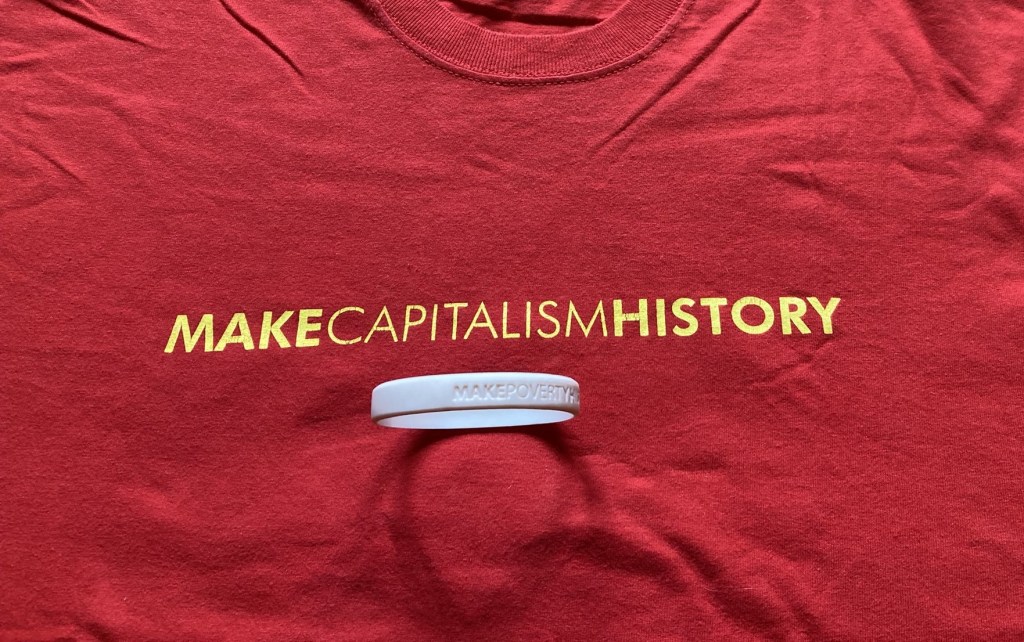
The Meadows is humming. Folk everywhere. It’s a carnival. I walk past a stall selling SSP “Make Capitalism History” T-shirts and another selling “No Sweat” anti sweatshop gear with a broken swish logo. Everyone is dressed in white. I’m wearing my white Levis and blue jacket combo that I think makes me look like David Hemmings in Blow Up. We’ve all got something white on. Then a group of anarchists walk past dressed all in black. They look like a bunch of boy scouts out on patrol.
I meander through the crowds across the Meadows towards Victor Hugo’s where I buy some lunch. I tell myself it’s for old time’s sake, but we could never afford to eat there back in the day. I walk over to Argyle Place to remind myself of the shop where we got really cheap tomatoes. It’s selling something different now. And I have to go see the whalebones. These are the real memories. This was the place we lived. These were the streets we walked every day. I walk into Marchmont and look at the flat. Someone has painted the door the wrong colour. Sacrilege. It’s not our place any more.
I look at the tenements. I look at the towers and turrets of Marchmont and Warrender Park. The Palace of Marchmont. This is our place. It will always be. I’ve got to go to the links so I can see the glory of Mary Barclay’s church standing guardian over the kids playing golf and the dog walkers and the joggers and the lovers and the rest of the world out for the day.
And then I stroll back to the centre of the Meadows with a massive smile on my face, just soaking in the celebratory atmosphere. We’ve come here to make a statement, but we’re going to enjoy the day.
I feel a tap on my shoulder and the challenge “What are you doing here, ya beg numpty?” and when I turn around, it’s only Mr Gavin Buchanan standing there togged out in his best white T-shirt and best blue and white kilt. It turns out he’s wearing a dress tartan which he always used to say should only be worn in the evening. But he excuses himself because he says this is a really important day. He says we need to make it special. I feel outdressed.
Anyway, that’s my plans to go to our special places out of the window. We spend the next two or three hours catching up. We join the walk down to Princes Street and back with everyone else, comparing notes and record collections. I always remembered Pall as the music buff, but Gav has got a few interesting suggestions for me to look up when I get back.
We bring each other up to date about the folk we used to stay with. He’d heard about Nessie and Kat’s business but he hadn’t heard about Sarah – not surprising because he didn’t really know her that closely. Nessie and Kat have done really well creating web pages for various people. With Kat’s brains and Nessie’s energy, they couldn’t really go wrong. They call themselves “Additional”. As in “Additional Advertising Agency”. You’ve probably heard of them too. If not, you can google them. Mind, they sold the company to one of the big names recently. Microsoft or Facebook or someone. Sarah did well, too. Sometimes gets included in those articles on female architects that you see in the press. She designed that school in North London that was in all the Sunday supplements a few years back. Probably only the English Sundays, mind.
I knew about Pall having moved to Canada and advancing the course of modern medicine from Toronto or Ottawa or somewhere important. I didn’t know about Fi or Cat. There was a rumour that Pete & Fi were an item on & off for a few years, back at the start of the 90s. I asked Gav. He went red – he always did when the conversation turned to Pete. He told me about Cat – to change the subject. Apparently, she’s just had her first book published. It’s called “Stories” because that’s what it is. A collection of short stories, some of which had been printed in the Scotsman. Of course, I’d never noticed. No-one in London notices what’s going on in Scotland.
“How about Fi?” I ask.
He smiled and said: “She’s around somewhere. On the Meadows. We’ll find her later.”
He’s still the raving nationalist he ever was and, as we walk back up Lothian Road to Tollcross, he tells me everything I need to know about how great it is in Scotland since it got its parliament back. But he also wants to show me something and he leads me past the church along Bruntsfield Place. I tell him I have to go into Macsween’s and get a haggis. For old time’s sake. I’m vegetarian now, so it’ll have to be a veggie haggis. Just like with Guiness, the best haggises are the ones they keep to sell at home, so this haggis isn’t like the rubbish that has started to appear in supermarkets down south. But it’s worse than that. The shop’s gone. Killed off by Brit Pop. Or John Major.
We continue, heading towards Morningside.
“What’s this, Gav?” I say. “There was a time you wouldn’t be seen dead in Morningside.”
“Aye, well times change. This is where I stay now.”
It turns out he lives down a road not far from the Dominion. He’s got his own front garden and front door. He’s not doing too badly. He leads me through his living room into the back garden. Passing through the french doors, I notice a framed picture to one side. It’s a wedding photo. Fairly recent. It’s easy to recognise that chap wearing the full highland dress.
“Gavin, you old dog. You should have told me. Congratulations.”
He picks it up, gives it to me, and suggests I take a closer look at the picture and Mrs Buchanan in particular. It takes me a while to recognise that face without the spiky black hair and kohl.
“Well, well, well. This is young Fiona, is it not?”
“Aye,” he says, sheepishly. “Wee Fi.” And the smile on his face could even melt the heart of a Church of Scotland minister.
But that isn’t even the surprise he wanted to show me. Not the only one. We go through to the back across the small patch of grass towards a solitary tree at the bottom of the garden. There, off to the side is a lump of rock.
“Go on, take a good look.”
I don’t need to. I know what it is. The sword is still obvious, slightly off the horizontal, the handle towards my hand. Come, let me clutch thee. Gav’s smiling. He lets me look over it while he goes in and brews up. I can see what I’d missed before, what hadn’t been visible when it was in that old graveyard in Comrie. There are some scratches in the granite. Three or four different sets. Fairly deep and fairly well worn. It helps that the sun is out and bright so the light is right to see them. There’s something in latin with Roman numerals. There’s one of those curly Saxon decorations that look like ammonites and another that looks like that dog or something that you see on tattoos – chasing its tail and getting tied in knots. And there are a few of Pete’s matchstick runes. I can’t read them, but I know what they mean.
He comes back out with my cuppa and, as we sit on the grass, he starts to tell me how he got it. How Gav and Fi and Cat were in Comrie one New Year’s and while everyone else was preoccupied with first footing, they took advantage and stole out to the old parish church at Tullichettle and did a bit of tidying up in the cemetery.
“When that eejit stood up in parliament and said that the stone should be returned, we decided to take him at his word. For once. Got Fiona’s old sled and dragged it down to the road. Bit of a struggle, but we just about managed.”
A few minutes later, this other bloke comes in. Gav introduces us, and of course this bloke, Iain, has to make the “rather be a Numpty than a Ned” joke. Then he says, “I hope you are nae numpty enough to believe any o’ that rubbish he’ll tell you about that lump a rock.”
So I tell him what I know.
“You mean this lump of granite here. This igneous lump of quartz, plagioclase, and biotite from the Devonian, intruded into the Lower Palaeozoic rocks of the Southern Uplands 400 million years ago, then slowly crystallised into the magnificent specimen you see before you.
“This ingenious rock with the wonderful hornblende crystals. This intrusive granite that sat in the earth moving back and forth with the tectonic plates, buffeted by orogenesis, all the time waiting until the ice age before catching a ride down south on a glacier. This rock that ended up in God’s own county as the ice melted and was picked up by a group of ancient Brits on what is now Cannock Chase and treasured for the strange arrangement of these dark hornblende and biotite crystals, which look, you must agree, uncannily like a sword.
“This inspirational stone which was used by the group of Brits, who the Romans called Cornovii, to identify and celebrate their chief and, no doubt, used to distinguish them from their neighbours to the East. This stone with the sword which was treasured by the Brits and which was stolen by the Romans and taken to a military base at Letocetum as a war trophy to inspire roman soldiers heading west to battle the uppity Welsh.
“This ignoble stone which was reclaimed by the Brits when the Romans left and used to inspire the fight against Angles and Saxons and other newcomers. This stone from Loch Arthur in Dumfries which became Arthur’s Sword in the Stone for Brits to rally round. This stone which was filched by the Anglo Saxons of Mercia once they had themselves cleansed the Brits and which was installed in Lichfield by Bishop Chad, now Saint Chad, 1300 years ago, but was itself half inched by the Danes from Repton a couple hundred years later.
“This incomparable stone which was traded by various Danes and Norwegians, or Vikings as they are popularly known, before being captured by a bunch of plucky Irishmen settling in the islands west of Scotland and calling themselves Scots. This stone on which Kenneth MacAlpin was enthroned in the ninth century in Iona and which was carried to Scone when he overcame the Picts.
“This imperial boulder which was used for coronations outside the Palace of Scone for 300 years before the Norsemen returned in the shape of Edward the first, Norman king of England. This stone which was hidden by the bishops at Scone and replaced with a lump of sandstone from the floor of the abbey for crazy Eddie to carry away.
“This impenetrable stone which was hidden in plain sight in various cemeteries around Perth for 700 years before being found in Comrie by three Scottish students.
“This immortal rock which was liberated from Comrie one New Years Eve while the locals were focussing on their flaming torch parade.
“This iconographic stone with its mix of crystals and its rich history which, just like all of us, is part Brit, part Roman, part Anglo Saxon, part Scot, part Viking, and maybe part other stuff, too.
“This inviolable stone…”
But he ain’t listening.
“Come on Gav,” he says. “Let’s go back to the Meadows and see if we can catch Texas before they finish.”
 The Ned Wood Archive