Why are Nottingham Forest known as the Tricky Trees?
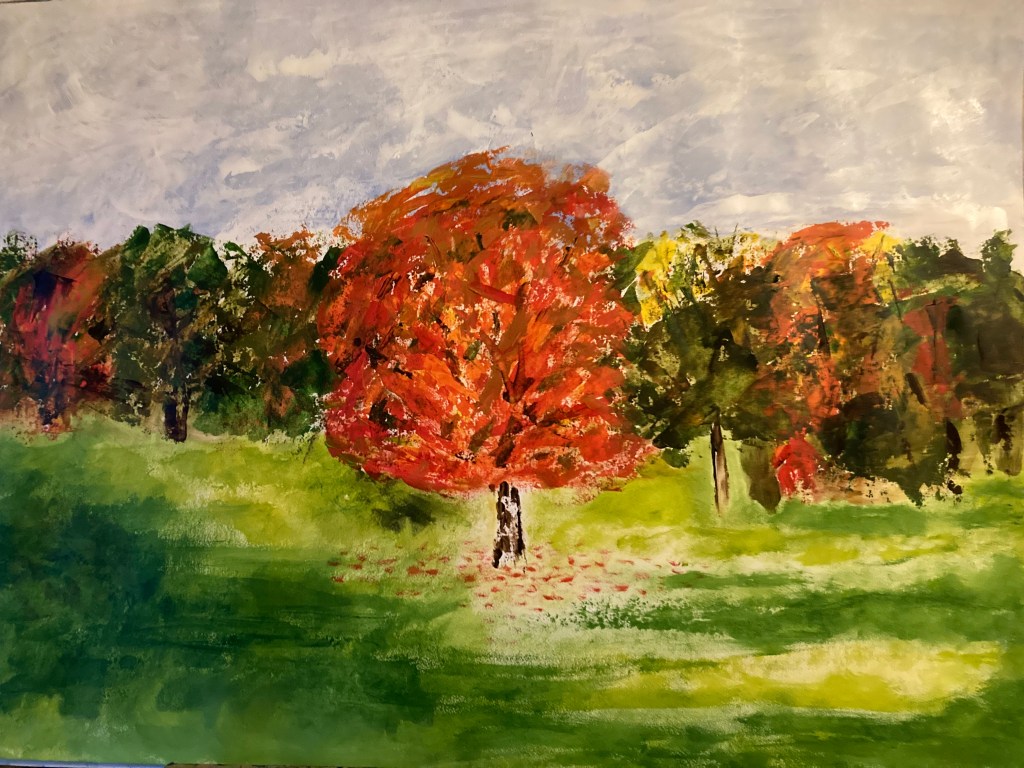
Have you ever wondered “why are Forest known as the Tricky Trees?” Do you know how Forest got their nickname? Here, with help from Don Wright and Ken Smales, is the story of the original Tricky Tree.
The story begins with Victorian explorer Arthur C[lennam] Widdowson in the upper reaches of the Amazon. The name Widdowson will be familiar to many Forest fans – Arthur’s younger brother Sam is renowned as one of our most important players from the nineteenth century. Sam should have a statue up at the ground, or at least his name on the wall at the Trent End. It was Sam who introduced the Forest way of playing. If you’ve read Jonathan Wilson’s “Inverting the Pyramid”, you know that, back then, football in England was all kick and run. Passing the ball was what the cultured folk in Scotland did. The Royal Engineers, one of the strongest sides in English football in the 1870s, adopted the Scottish approach, and in 1873, after the Engineers had beaten Forest 2-1 at Trent Bridge, Sam Widdowson had Forest copy the Engineer’s way of playing: passing the ball to the feet of a colleague. It isn’t recorded whether Widdowson ever said “If God had wanted us to play football in the clouds he’d have put grass up there”, but it would have been entirely in character.
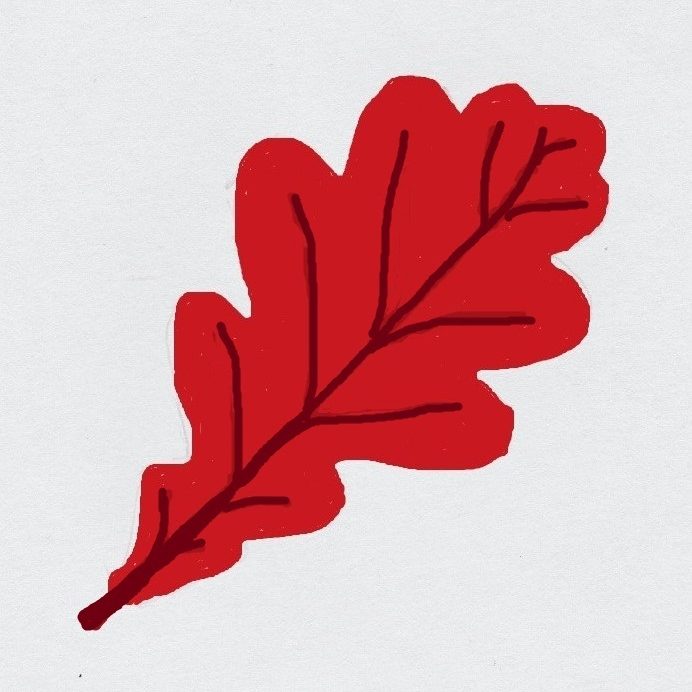
In 1859, older brother Arthur C Widdowson was exploring the Ji-Paraná River in the upper Amazon when he came across some locals playing a game of skill that looked to him like a variant of the football which was then being played in places like Nottingham and Sheffield. They were kicking what appeared to be part of an animal against a tree with a rubbery trunk and distinctive red leaves in the centre of a clearing. Whenever one of the tribe kicked the “ball” against the tree, it bounced back with greater velocity straight to the kicker. With the aid of a guide, Widdowson was able to converse with the Brazilian tribe and was invited to observe their game and the competition to select the best player. The tribesman who could make the greatest number of one-touch passes to the tree in succession was rewarded with the place of honour, next to Widdowson, at the feast held after the competition. Widdowson, although not as skilled at football as his younger brother, was able to make a good impression on the locals by showing some ability at the game.
Arthur Widdowson returned to England the following year having documented the vegetation across much of the Upper Amazon and bringing with him a number of plant samples that were unknown in the UK. Among these was a young sapling of the same type as the football tree he had seen. The folk at the Royal Gardens at Kew confirmed the sapling as a new species of the same genus as the rubber tree and named it “Widdowson’s Rubber” (Havea widdowsonii) after its discoverer. Widdowson donated the tree to Curtis’ Arboretum in his home town of Nottingham.
When Forest started, back in 1865, they played their games at Forest Fields, not far from the Arboretum. When Sam Widdowson joined in about 1869, the players would take refreshment in the Clifton Arms on Shakespeare Street after a game. On most days, Sam and his colleagues would take a detour into the Arboretum and reproduce the Amazon tribe’s game of skill against Widdowson’s Rubber which had by then grown to a healthy size. What Sam and the rest of the team noticed, however, was that, if they all stood around the tree, it wouldn’t just return the ball to the kicker but would sometimes “pass” it to one of the other players. They all had to be on their guard to avoid being caught out by a quick pass from what they soon came to call the “Tricky Tree”.
Sam Widdowson had the Tree transplanted to Forest Fields and used it during training. He noticed that the Tree would often “pass” the ball to the best placed player on the pitch and realised that he could make even more use of it. When he introduced the 2-3-5 formation, he had the Tree play in the middle of the three half backs. This central position was what Jonathan Wilson describes as “the fulcrum of the team… instigator … the most important man on the field.” (This position didn’t become defensive until the change of the offside law in 1925.) When Forest played Sheffield Wednesday at the beginning of 1878, the Tricky Tree made its debut for the Reds and took up position on the edge of the centre circle. Although not tremendously mobile, the Tree was a significant asset, playing passes out to the wing halves and forward to men in more advanced positions. Widdowson had the athletic Reggie Yates partner the Tree in midfield and do all of its running for it. If you think that share of responsibilities sounds familiar, that’s because Reggie Yates is the great great great grandfather of current Forest hero Ryan Yates. Brazilian flair and Notts grit – always a winning combination! In that first game against Sheffield Wednesday, the Tricky Tree provided what we now call “assists” for each of Forest’s goals in a 4-1 victory. Its place in the team was established. As Widdowson told his team mates “Your job is to win the ball and give it to someone who can play. Just get the ball and give it to the Tricky Tree.”
For the next three years, the Tree was a regular fixture in the Forest side, orchestrating play from the edge of the centre circle. In January 1880, the Tree scored its only goal in Forest colours in the FA Cup victory against Blackburn Rovers when it spotted the Rovers goalkeeper of his line and scored from just inside the Forest half.
Also in 1880, the Tree was asked to play for England. The selectors in London had heard of its reputation and wrote to the club asking it to appear for that year’s Scotland game along with Sam Widdowson and Forest forward Ed Luntley. However, after this announcement, one of the selectors travelled to Nottingham to watch the Tree play. When the eleven for the Scotland game was announced, the name of the Tree was missing, without any explanation. Having found out that the midfield genius was in fact a tree, the selectors, to accusations of plantism, got cold feet and decided they could not sanction having a tree play for England.
More controversy was to follow. In 1882, the whole of Nottingham was shocked when it was announced that the Tricky Tree had signed for the Stoke-on-Trent side. However, the move was a failure from the start. Stoke-on-Trent’s kick and run style of play was not suited to the Tree’s more subtle passing game. The move didn’t work and the Tree was back playing for Forest before 1882 was out.
The Tree played another two seasons for the Reds before it had to retire. In 1884/5, Forest had another one of their famous FA Cup runs and played Old Etonians in the quarter final. Forest won 2-0, but the game is sadly remembered for an incident between the Tree and Arnold “Chopper” Harris, the uncompromising Etonian defender. Witnesses say that Chopper Harris took an axe to the Tree and severed five of its roots. Football was much more rugged in those days and such a physical approach, although not common, was certainly not unheard of. The Tree was out for the rest of the season. Without the Tree, Forest lost the semi final to Queens Park (after a replay in Edinburgh).
The Tree tried a comeback at the beginning of the 1885/6 season, but, after the Chopper Harris incident, the Tree was never able to command midfield and make the same penetrative passes again. The Tricky Tree played its last game for Forest against Notts Olympic in November, but the magic wasn’t there. The Tree retired and became a publican at the Forest Tavern in Annesley Woodhouse. The Tree remained a hero to all Forest fans and the Forest Tavern was frequently visited before a home game. Folk say the Tree was always happy to talk to any visiting fan about “the good old days”.
The Tricky Tree passed away on March 25th, 1932 and is still revered by Nottingham Forest fans aware of the club’s history. Between 1878 and 1885, the Tricky Tree played 154 times for the Reds and scored one goal. The Tree’s role as a player in the fantastic Forest side of the 1870s & 80s and its impact as a great visionary innovator alongside Sam Widdowson will never be forgotten. As a trailblazer for Brazilian footballers in the rebel city, we should always be grateful to it.
The Tricky Tree’s boughs are buried in Rock Cemetery. Along with the City Ground and the Brian Clough Statue, the Tricky Tree memorial headstone in the cemetery is an important site of pilgrimage for Forest fans worldwide whenever they visit the city.
Links
Inverting the Pyramid (Jonathan Wilson)
Book Review: Forever Forest (Don Wright)
Forest First 125 Years (Ken Smales)
The forgotten story of … Sam Weller Widdowson: footballer, cricketer, innovator (The Guardian)
The Forest Preservation Society post on the Royal Engineers game
 The Ned Wood Archive